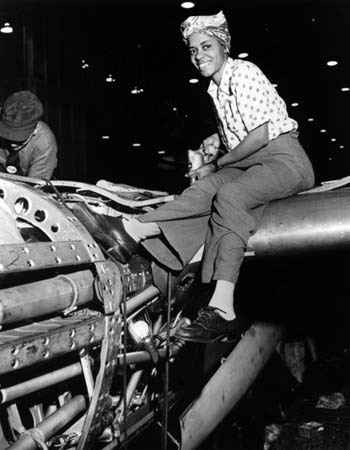
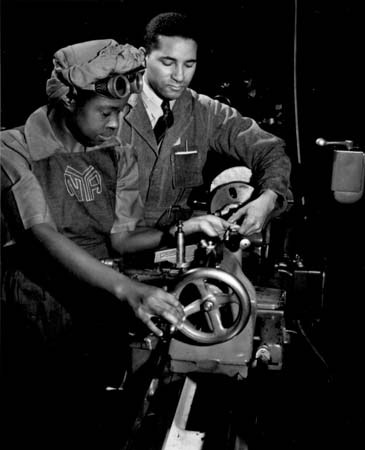
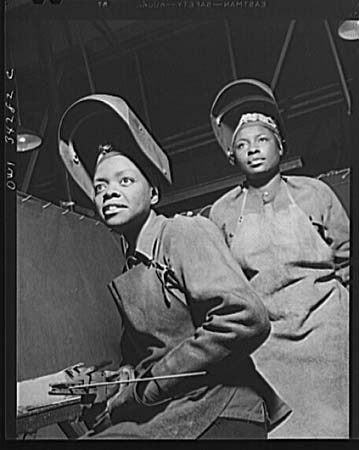
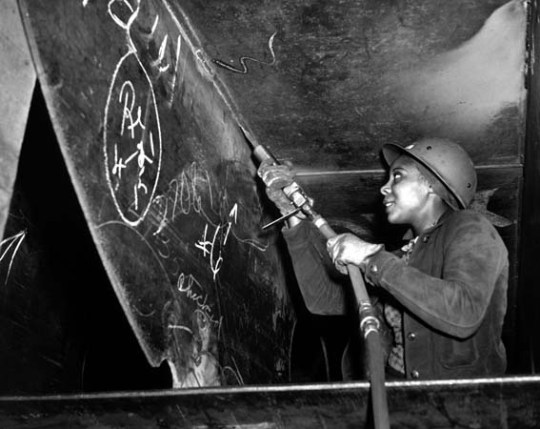
During World War II, 600,000 African-American women entered the wartime
workforce. Previously, black women’s work in the United States was
largely limited to domestic service and agricultural work, and wartime
industries meant new and better-paying opportunities – if they made it
through the hiring process, that is. White women were the targets of the
U.S. government’s propaganda efforts, as embodied in the lasting and
lauded image of Rosie the Riveter.Though largely ignored in America’s
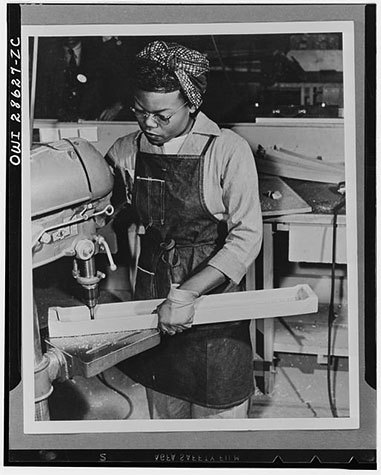
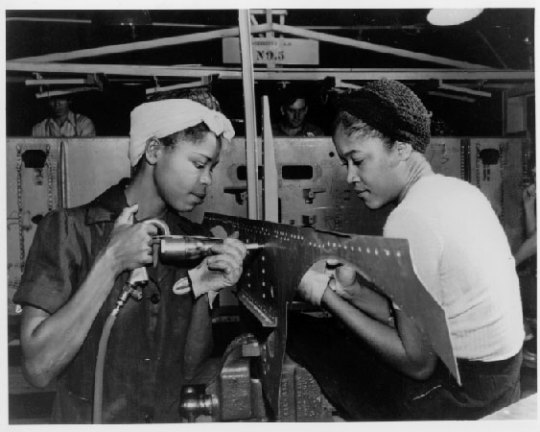
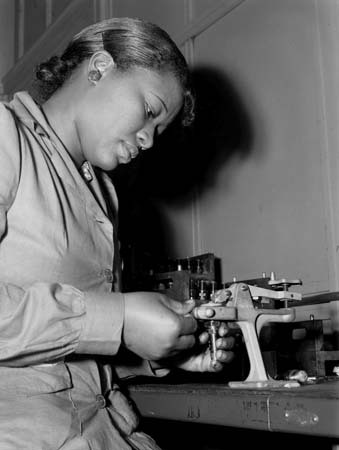
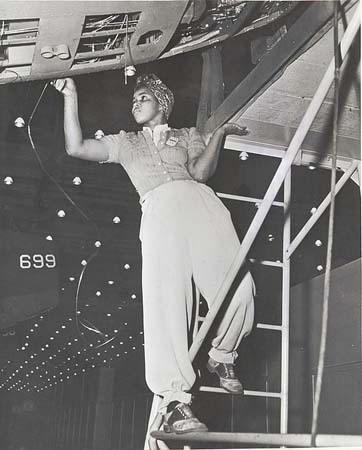
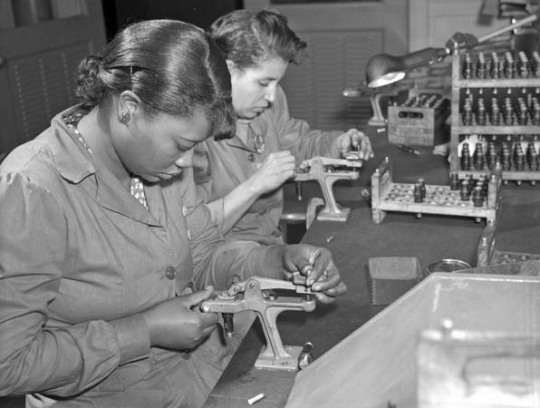
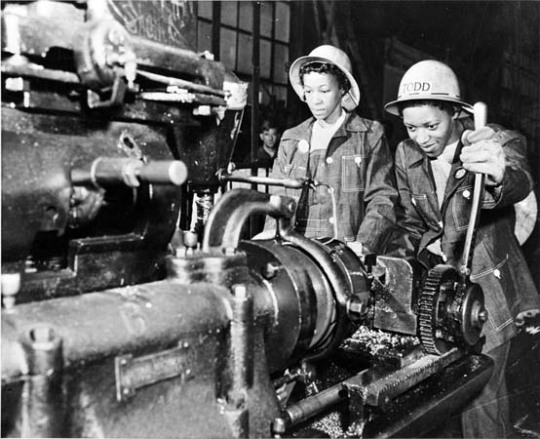
popular history of World War II, black women’s important contributions
in World War II factories, which weren’t always so welcoming, are
stunningly captured in these comparably rare snapshots of black Rosie
the Riveters.
Reblogging because I’ve never seen these before, and I bet a lot of people haven’t.
My great grandma was a bomb builder in Cleveland. There’s a restaurant in the city, near the airport, called 101st Bombardiers (I think) that we went to after her funeral. We got into a conversation with the owner about how she specifically wanted us all to go there, and the owner called up the previous owner, her mother, who showed up and told us tales about my grandmother from back when they worked together.
I don’t know if there were any women of color they worked with, but knowing my grandmother they would have been fast friends.

 Anythinggoes12